One Tuesday I decided to find out how often I actually checked my phone during work. I put a little tally sheet next to my keyboard and made a mark every time I picked it up. By lunch I'd made nineteen marks. By the end of the day: forty-seven. Forty-seven times. I wasn't waiting for anything important. There were no emergencies. Most of the time I unlocked it, stared at nothing in particular for twenty seconds, and put it back down — then did the exact same thing twelve minutes later.
That night I did some rough maths. Forty-seven pickups at about twenty seconds each is roughly sixteen minutes of staring. But that's not the real cost. Every pickup broke whatever I was doing, and getting back into a hard task takes a few minutes each time. So those sixteen minutes of phone time probably cost me over an hour of real focus. I had been blaming my willpower for months. That tally sheet told me a different story: my willpower wasn't the problem. My desk was.
The idea that changed my desk
A few days later I came across a concept from Shawn Achor's book The Happiness Advantage called the 20-second rule. The idea is simple: if you add just twenty seconds of effort between yourself and a bad habit, you're far less likely to do it. And if you remove twenty seconds of effort from a good habit, you're far more likely to do that instead. Twenty seconds. That's all it takes to tip the balance.
Achor's own example was about playing the guitar. He wanted to practise more, but his guitar sat in a closet. So he took it out of the closet and put it on a stand in the middle of his living room, and he put his TV remote's batteries in a drawer in another room. The guitar got twenty seconds easier to reach. The TV got twenty seconds harder. His practice time went up, and his TV time went down — without any extra willpower at all. I read that and thought about my phone sitting right next to my keyboard, one thumb-twitch away, all day long.
Here's why it works, and why willpower alone keeps failing us. Willpower is a decision you have to make fresh every single time. Forty-seven times a day, I had to decide "no, don't pick up the phone." I lost that argument about half the time, because deciding takes energy and I was tired by 11am. Friction is different. Friction is a decision you make once — on a Sunday evening, when you're calm — and then it protects you all week without asking you anything. You don't need discipline at 3pm on a Tuesday if your phone is in another room. You just need to have put it there on Sunday.
What I changed on my desk
I started on a Sunday evening, and the whole job took about twenty minutes. That felt fitting, somehow. Twenty minutes of setup to save myself twenty seconds of friction, forty-seven times a day.
First, the phone. I moved its charger from my desk to a shelf in the hallway. That was the whole change, and it was the one that mattered most. Now when the phone needs charging — which is every day — it lives in the hallway. During work hours it sits there, face down, on silent. To check it, I have to stand up, walk to the hallway, and pick it up. That's about twenty seconds of effort. It doesn't sound like much. But my daily pickups dropped from forty-seven to nine in the first week. Nine! And five of those were actual phone calls I needed to take. The other four were me walking to the hallway out of pure habit, realising there was nothing to see, and walking back. The urge faded within days, because the hallway made the urge cost something.
Second, the apps. I didn't delete anything — that felt too dramatic, and I knew I'd just reinstall them. Instead, I logged out of the three social apps I scrolled most, and I moved them into a folder on the third screen of my phone. Now opening one means finding the folder, tapping the app, typing a password, and waiting for it to load. That's about twenty-five seconds. I timed it. It was enough. I still check them — I'm not a monk — but I check them twice a day now, on purpose, instead of forty times by accident. The difference between "I decided to look" and "my thumb decided for me" is everything.

Third, the browser. My biggest time sink at work wasn't my phone, it was the news tab. I had a news site set as one of my startup tabs, so every morning my browser opened straight onto headlines. I removed it and replaced it with a blank page. Now reading the news means typing the address by hand, which takes about eight seconds. I still read the news — at lunch, once, like a normal person — but I stopped falling into it at 9:05am before my brain had even woken up.
Making the good stuff twenty seconds easier
Here's the half of the rule most people skip: it works in both directions. Making bad habits harder is only half the job. The other half is making good habits easier to reach than the bad ones.
So I flipped my desk around. My notebook — the one I plan my day in — used to live in a drawer. Now it lives open on the left side of my desk, with a pen on top of it. When a thought pops up mid-task, I write it in the notebook in three seconds instead of opening a new tab to "look something up" and losing twenty minutes. The notebook is now easier to reach than the distraction. That's the whole trick.
I did the same with my water bottle. It used to sit in the kitchen, which meant every time I wanted a drink I walked past the fridge, the snack cupboard, and the window — three more chances to get distracted. Now the bottle sits on my desk, filled every morning. I drink more water, and I take fewer wandering trips. A two-dollar bottle fixed two problems at once.
And the big one: my work files. The document I'm supposed to be writing used to be buried three folders deep, and opening it felt like a small chore. Now I leave it open overnight, or I pin it to my taskbar. When I sit down in the morning, the work is already there, waiting. The first thing I see is the task, not a blank browser. Starting takes about five seconds instead of five minutes of faffing around, and those five minutes were where most of my mornings used to disappear.
What two weeks of this actually looked like
I kept the tally sheet going, because I wanted real numbers, not a nice feeling. Week one with the new setup: phone pickups averaged eleven a day, down from forty-seven. Week two: eight. My news-tab visits went from "every morning plus five or six random ones" to once at lunch. And here's the number I cared about most: I finished my main task before lunch on eight out of ten days. Before the change, that happened maybe three days out of ten.
The funny thing is, I didn't feel more disciplined. I felt exactly the same — lazy in the mornings, tempted by distractions, happy to procrastinate. The difference was that procrastinating had become slightly annoying, and working had become slightly easy. That's all it took. I didn't become a better person. I built a better desk.
One more number, because I know some of you will ask: my screen-time report dropped from about three hours and forty minutes a day to just under two hours. I didn't set out to cut screen time. I just made the phone harder to grab and the notebook easier to open, and the hours took care of themselves. That still surprises me a little.
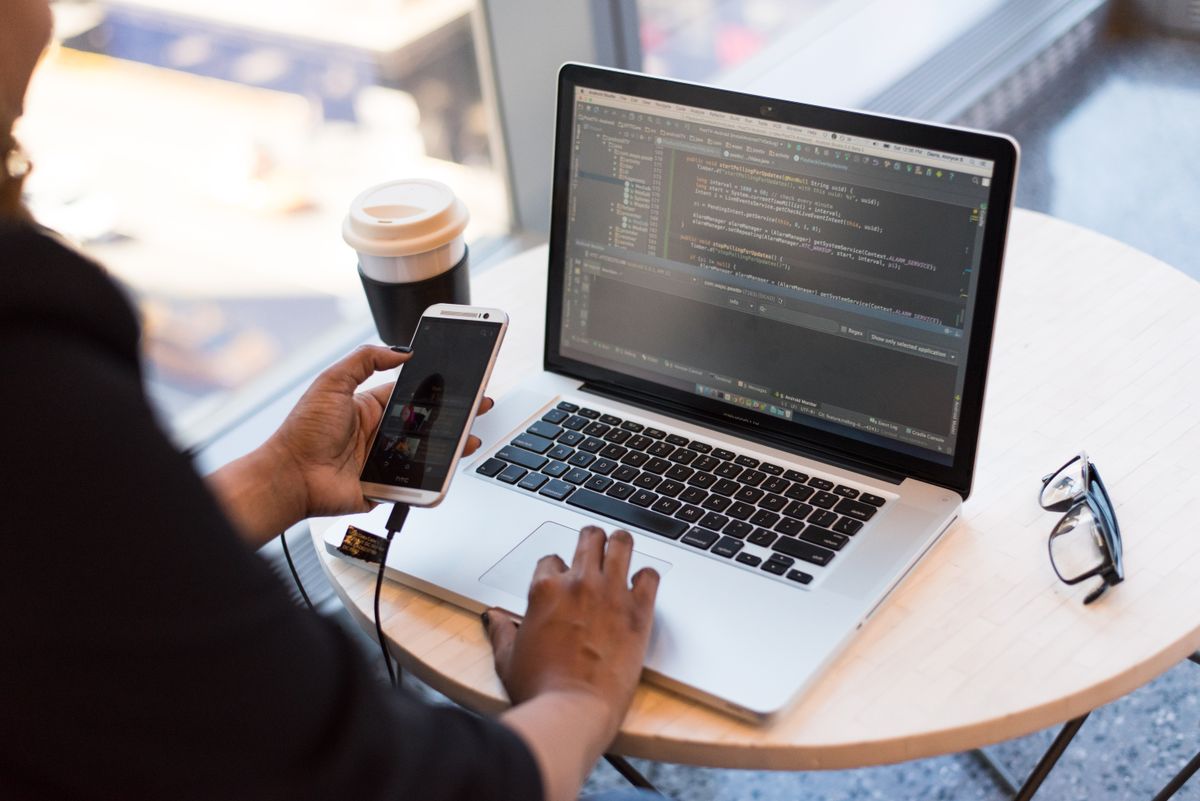
There was one unexpected side effect I should mention. My evenings got better too. Because my phone spent the workday in the hallway, it stayed in the hallway after work as well — I just never got around to moving the charger back. So now I charge it there every night, and I read a book in bed instead of scrolling until midnight. I sleep better. I didn't plan that part at all. It just fell out of a twenty-minute Sunday job.
What didn't work
Not everything I tried stuck. I tried putting my phone in a kitchen drawer during work, and that lasted exactly one day — I kept worrying I'd miss an important call, and the worrying was more distracting than the phone. The hallway shelf worked because I could still hear it ring. That's an important detail: the friction has to be annoying, not anxiety-inducing. If your fix makes you nervous, you'll abandon it by Wednesday. Make it inconvenient, not impossible.
I also tried blocking websites with an app, and I hated it. Every time it blocked me, I felt like a child being told off by my own computer, and within a week I'd found three ways around it. Friction you build yourself, with your own hands, feels different from a lock someone else put on. The hallway shelf is my choice. A blocking app felt like a punishment. Same goal, totally different feeling. The one that felt like mine is the one that lasted.
And one honest warning: the twenty-second rule won't fix a job you hate or a workload that's genuinely too big. If you're drowning in work, moving your phone won't save you. It just removes one leak from the boat. That's still worth doing — but don't expect it to fix everything, and don't blame yourself when it doesn't.
Try it this weekend
Here's the twenty-minute version. Pick one bad habit and one good habit. For the bad one, add twenty seconds: move the charger, log out of the app, take the snacks off your desk and put them in a cupboard. For the good one, remove twenty seconds: leave the notebook open, pin the document, fill the water bottle, put your running shoes by the door.
Do it on a Sunday evening, when you're calm and thinking clearly, because that's when the decision is cheap. Then just live with it for a week. Keep a tally sheet for one day if you want the numbers — I recommend it, because the numbers are what convinced me, not the theory. If your pickups drop, keep the setup. If they don't, change the friction, not yourself. You're not the problem. Your desk is. And desks are much easier to fix than people.
I still check my phone too much some days. I'm not cured, and I don't think anyone is. But most days now, the phone stays in the hallway, the notebook stays open, and the work gets done before lunch. All of that came from twenty seconds. Twenty seconds of walking, twenty seconds of typing a password, twenty seconds of effort that I only had to spend once. It was the cheapest productivity upgrade I have ever bought, and it cost me nothing at all.


